1
Turning and turning in the widening gyre
The falcon cannot hear the falconer;
Things fall apart; the centre cannot hold;
Mere anarchy is loosed upon the world,
The blood-dimmed tide is loosed, and everywhere
The ceremony of innocence is drowned;
The best lack all conviction, while the worst
Are full of passionate intensity.
Explanation
This opening paragraph paints a vivid picture of a world spiraling into chaos. Yeats starts with the image of a falcon circling in a “widening gyre,” a spiral that represents history’s cycles, each lasting about 2,000 years. The falcon can’t hear the falconer, meaning humanity or society has lost touch with its guiding force—whether that’s God, tradition, or order. The famous line “Things fall apart; the centre cannot hold” sums up the collapse of stability, reflecting the turmoil after World War I. Chaos (“mere anarchy”) is unleashed, like a violent, bloody flood (“blood-dimmed tide”) that drowns innocence and sacred values. The stanza ends with a grim observation: good people (“the best”) are paralyzed, lacking strong belief, while bad people (“the worst”) are driven by intense, dangerous passion. This sets a tone of despair, showing a world where order is crumbling and evil seems to have the upper hand. It’s a snapshot of a society on the brink, full of fear and uncertainty.
2
Surely some revelation is at hand;
Surely the Second Coming is at hand.
The Second Coming! Hardly are those words out
When a vast image out of Spiritus Mundi
Troubles my sight: somewhere in sands of the desert
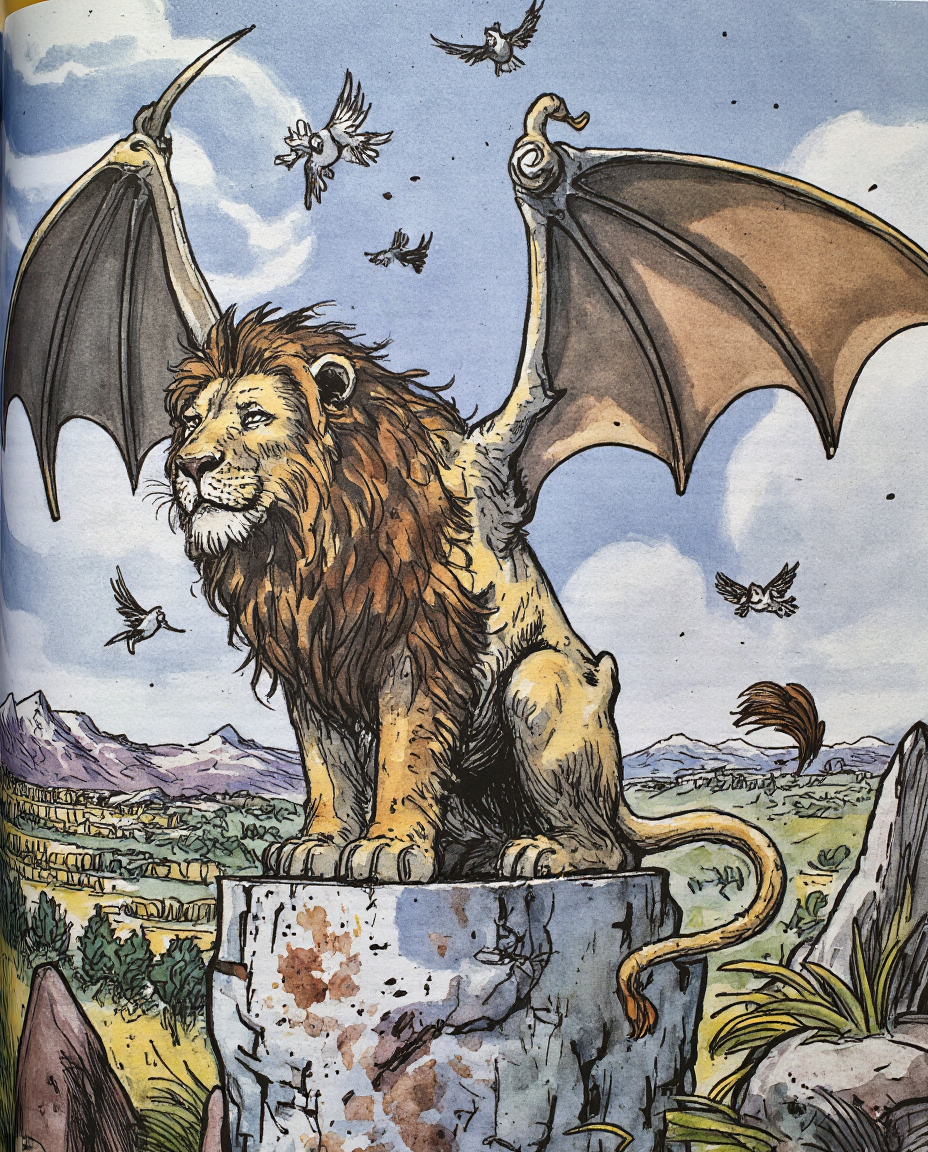
A shape with lion body and the head of a man,
A gaze blank and pitiless as the sun,
Is moving its slow thighs, while all about it
Reel shadows of the indignant desert birds.
The darkness drops again; but now I know
That twenty centuries of stony sleep
Were vexed to nightmare by a rocking cradle,
And what rough beast, its hour come round at last,
Slouches towards Bethlehem to be born?
Explanation
The second paragraph shifts from describing chaos to envisioning what comes next. The speaker senses a major change (“revelation”) is near and mentions the “Second Coming,” the Christian idea of Christ’s return. But instead of hope, this feels ominous. As soon as the words “Second Coming” are spoken, a disturbing vision appears from “Spiritus Mundi,” a kind of shared human memory. The speaker sees a monstrous creature in a desert—a sphinx-like figure with a lion’s body and a man’s head, its stare cold and merciless like the sun. It’s slowly waking up, surrounded by circling, angry desert birds, which adds to the eerie mood. The vision fades, but the speaker realizes this creature, dormant for 2,000 years (since Christ’s era), has been stirred into a “nightmare” by a “rocking cradle,” possibly symbolizing Christ’s birth or a new era. The stanza ends with a chilling question: what is this “rough beast” slouching toward Bethlehem, the birthplace of Christ, to be born? This suggests not a savior but a dark, menacing force, hinting at a new, terrifying cycle in history. The paragraph blends Christian imagery with Yeats’ mystical ideas, creating a sense of dread about what’s coming.
Difficult Words and Their Meanings
- Gyre (Line 1): A spiral or circular motion; Yeats uses it to describe historical cycles.
- Falconer (Line 2): A person who trains or controls falcons, symbolizing authority or guidance.
- Anarchy (Line 4): Complete disorder or lack of government; here, it’s chaotic destruction.
- Blood-dimmed (Line 5): Stained or darkened by blood, suggesting violence.
- Conviction (Line 7): Strong belief or determination.
- Revelation (Line 9): A dramatic unveiling of truth or a divine event.
- Spiritus Mundi (Line 12): Latin for “spirit of the world,” a collective human memory or imagination.
- Pitiless (Line 15): Without mercy or compassion.
- Indignant (Line 17): Angry or resentful, often at something unjust.
- Vexed (Line 20): Disturbed, irritated, or troubled.
- Slouches (Line 22): Moves in a lazy, drooping way, suggesting carelessness or menace.







No Responses