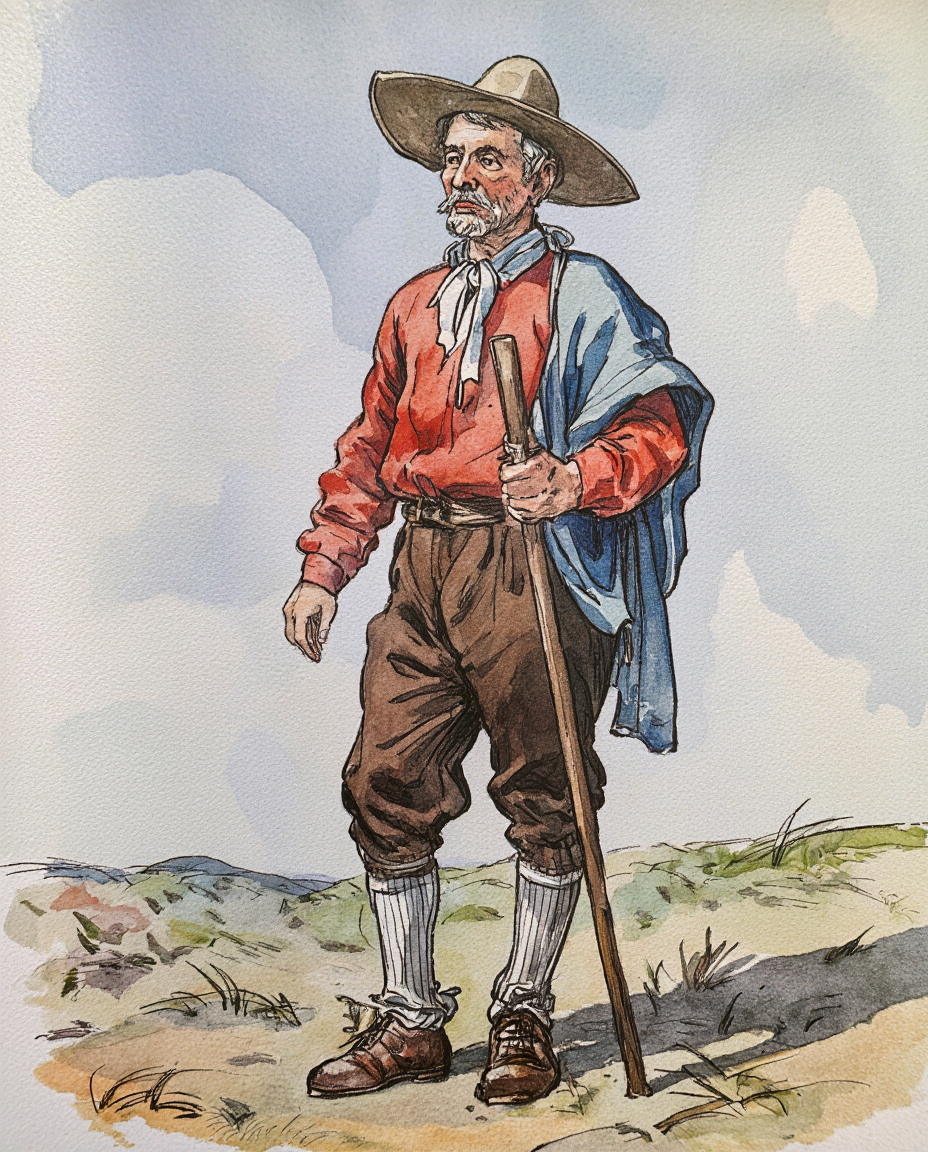
-by Robert Frost
1
Mary sat musing on the lamp-flame at the table
Waiting for Warren. When she heard his step,
She ran on tip-toe down the darkened passage
To meet him in the doorway with the news
And put him on his guard. ‘Silas is back.’
She pushed him outward with her through the door
And shut it after her. ‘Be kind,’ she said.
She took the market things from Warren’s arms
And set them on the porch, then drew him down
To sit beside her on the wooden steps.
Explanation
The poem starts with a quiet, intimate scene—Mary’s waiting by a lamp, setting a reflective mood. Her tiptoeing and hushed tone show she’s nervous about Warren’s reaction to Silas’s return. Silas is a hired worker who’s worked for them before but has a history of leaving them in the lurch. Mary’s plea to “be kind” (line 7) suggests she knows Warren’s frustrated with Silas and wants to soften his response. The moonlight and porch setting create a sense of calm before the emotional tension unfolds.
2
‘When was I ever anything but kind to him?
But I’ll not have the fellow back,’ he said.
‘I told him so last haying, didn’t I?
If he left then, I said, that ended it.
What good is he? Who else will harbor him
At his age for the little he can do?
What help he is there’s no depending on.
Off he goes always when I need him most.
He thinks he ought to earn a little pay,
Enough at least to buy tobacco with,
So he won’t have to beg and be beholden.
‘All right,’ I say, ‘I can’t afford to pay
Any fixed wages, though I wish I could.’
‘Someone else can.’ ‘Then someone else will have to.’
I shouldn’t mind his bettering himself
If that was what it was. You can be sure
When he begins like that, there’s someone at him
Trying to coax him off with pocket-money,—
In haying time, when any help is scarce.
In winter he comes back to us. I’m done.’
Explanation
Warren’s irritation is clear—he sees Silas as unreliable and a burden. He recalls telling Silas last haying season that leaving meant no return (lines 13–14). His practical side comes through: Silas is too old and weak to be useful (line 15), and Warren can’t afford to pay him fixed wages (line 22). The mention of someone “coaxing” Silas away with pocket money (line 27) suggests Silas chases better opportunities, which Warren resents, especially during the critical haying season. This sets up Warren’s view of duty as tied to reliability, contrasting with Mary’s compassion.
3
‘Sh! not so loud: he’ll hear you,’ Mary said.
‘I want him to: he’ll have to soon or late.’
‘He’s worn out. He’s asleep beside the stove.
When I came up from Rowe’s I found him here,
Huddled against the barn-door fast asleep,
A miserable sight, and frightening, too—
You needn’t smile—I didn’t recognise him—
I wasn’t looking for him—and he’s changed.
Wait till you see.’
‘Where did you say he’d been?’
‘He didn’t say. I dragged him to the house,
And gave him tea and tried to make him smoke.
I tried to make him talk about his travels.
Nothing would do: he just kept nodding off.’
‘What did he say? Did he say anything?’
‘But little.’
‘Anything? Mary, confess
He said he’d come to ditch the meadow for me.’
‘Warren!’
‘But did he? I just want to know.’
‘Of course he did. What would you have him say?
Surely you wouldn’t grudge the poor old man
Some humble part to play in his last days?
Poor Silas, so concerned for other folk,
And nothing to look backward to with pride,
And nothing to look forward to with hope,
So now and never any different.’
Explanation
Mary’s compassion shines here. She paints a vivid picture of Silas’s pitiful state—“huddled against the barn-door fast asleep” (line 34)—showing he’s at the end of his rope. Her attempt to give him tea and make him talk (lines 39–41) shows her kindness, even if Silas is too weak to respond. Warren’s question about ditching the meadow (line 46) reveals his skepticism—maybe Silas is just saying what Warren wants to hear. Mary’s defense, calling Silas “poor” and “concerned for other folk” (lines 50–51), highlights his humanity and pride in his work, urging Warren to see beyond his flaws.
4
Part of a moon was falling down the west,
Dragging the whole sky with it to the hills.
Its light poured softly in her lap. She saw
And spread her apron to it. She put out her hand
Among the harp-like morning-glory strings,
Taut with the dew from garden bed to eaves,
As if she played unheard the tenderness
That wrought on him beside her in the night.
‘Warren,’ she said, ‘he has come home to die:
You needn’t be afraid he’ll leave you this time.’
‘Home,’ he mocked gently.
‘Yes, what else but home?
It all depends on what you mean by home.
Of course he’s nothing to us, any more
Than was the hound that came a stranger to us
Out of the woods, worn out upon the trail.’
‘Home is the place where, when you have to go there,
They have to take you in.’
‘I should have called it
Something you somehow haven’t to deserve.’
Explanation
This is the poem’s emotional core. The moonlight imagery (lines 56–62) adds a tender, almost sacred tone to Mary’s realization that Silas is dying. Her definition of home as a place of obligation (line 73) reflects her belief that they should care for Silas, even if he’s not family. Warren’s colder definition (line 76) suggests home shouldn’t be earned, but he’s reluctant to see their farm as Silas’s home. The hound comparison (lines 70–72) underscores Silas’s vulnerability—like a stray dog, he’s come to them out of desperation. Frost uses this debate to explore duty and belonging.
5
Warren leaned out and took a step or two,
Picked up a little stick, and brought it back
And broke it in his hand and tossed it by.
‘Silas has better claim on us, you think,
Than on his brother? Thirteen miles away,
A town-bred banker, in a second-storey office,
Who never laid a hand on scythe or pitchfork—
How could he take him in? I say he’s done
The best he could: he’s helped him all he could.’
‘He’s got a brother, Warren—kin, you know—
And Silas ought to go to him for help.
I’d not refuse him, if he asked, the way
He’s asked it here. I’d take him, brother or not.’
‘Well, then—’
‘He’s come to die,’ she said again.
‘I see. I’ll go in to him.’
‘Be kind,’ she said.
‘I’ll do as much as look at him,’ he said.
‘Go easy, Warren, please.’
He went inside.
Explanation
Warren’s question about Silas’s brother (line 83) shows he’s still hesitant to take responsibility—why not his family? Mary’s response (lines 87–89) reveals Silas’s estrangement from his brother, making the farm his only refuge. Silas’s talk about Harold (lines 90–95) shows his pride in his work and his desire to leave a legacy, even if small. Warren’s willingness to go inside (line 112) suggests he’s starting to soften, influenced by Mary’s compassion. Mary’s repeated plea for kindness (line 113) shows her hope that Warren will show mercy.
6
The moon was low now, flattened out and red.
It barely cleared the hills. She watched it go,
And thought of Silas, worn as he was worn,
And turned and went inside to wait for Warren.
She took her station by the lamp again,
And sat there musing till she heard his step.
He stood there in the doorway, looking at her,
And said but one word only, ‘Dead.’
Explanation
The final scene is quiet but heavy. The moon’s setting (lines 116–118) mirrors Silas’s fading life, and Mary’s reflection ties the natural world to his fate. Warren’s single-word announcement, “Dead” (line 134), is stark and final, leaving Mary’s reaction and their unresolved debate hanging. Frost’s choice to end abruptly emphasizes the inevitability of death and the complexity of human relationships—there’s no neat resolution to the question of what they owed Silas.
Difficult Words And Their Meanings
- Hired man (title, throughout): A worker paid for manual labor, like farm work. Silas is a seasonal worker, not a permanent employee.
- Haying (line 13): Cutting, drying, and storing hay for animal feed. It’s tough, time-sensitive work, which is why Warren’s upset Silas left during this season.
- Ditch the meadow (line 46): Digging ditches in a field to drain water and improve it for farming. Silas mentions this as work he feels he owes Warren.
- Load of hay (line 40, implied): A stack of hay arranged on a wagon. Silas takes pride in doing this well, showing his skill.
- Shiftless (line 17, implied in Warren’s complaints): Lazy or irresponsible. Warren sees Silas as unreliable for leaving when needed most.
- Kin (line 87): Family or relatives. Refers to Silas’s brother, who won’t help him.
- Fell to (line 27, implied in context): Started doing something, like arguing or talking. Used to describe Silas’s debates with Harold.
- Be beholden (line 21): To feel indebted or obligated to someone. Silas wants enough pay to avoid this feeling.
- Morning-glory strings (line 61): Vines of the morning-glory flower, stretched tight with dew, resembling harp strings. Part of the poem’s vivid imagery.







No Responses